
All Saints Interchurch Academy
History
History Subject Leader: Ms H Orbell
D-Day 80
This year, Thursday 6th June will mark the 80th anniversary of D-Day and our school will be commemorating this significant event which saw the start of the liberation of Western Europe in World War 2.
The day will start with an assembly to explain to the children the significance of D-Day and why we should remember. Then, at 11am, along with many other schools across the country, each class will pause to read a poem written by Roy Palmer - Chelsea Pensioner and Herald.
To coincide with the commemorations, National Fish and Chip Day will also be held on 6th June. Fish and chips play a major part in the D-Day 80 commemorations: they were never rationed during the war and the words were even used as code by British paratroopers dropped behind enemy lines to identify friendly soldiers nearby – one calling out ‘fish’ and hopefully getting the reply ‘chips’! Our kitchen staff are offering a special D-Day lunch so please do look out for the menu.
We also look forward to welcoming our friends from the FACT Befriending group, who are joining us for lunch and may be able to share some of their experiences of the Second World War in March.
To help us enter into the spirit of the occasion, we are inviting pupils to dress in 1940s-style clothing on D-Day but please remember this is optional. You do not need to buy anything new: boys could wear shorts and a shirt, whilst girls could wear a dress.
Visits from March Veteran & Vintage Cycling Club
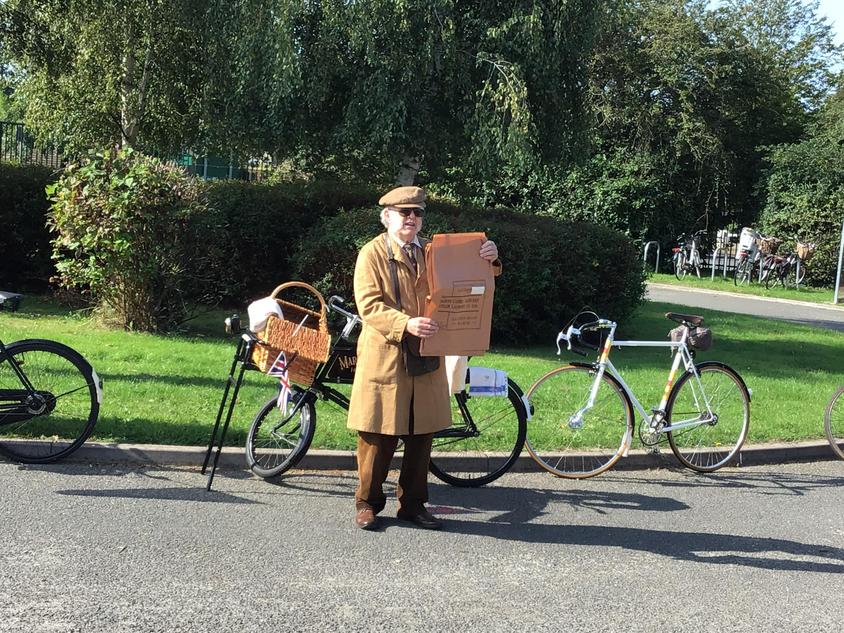
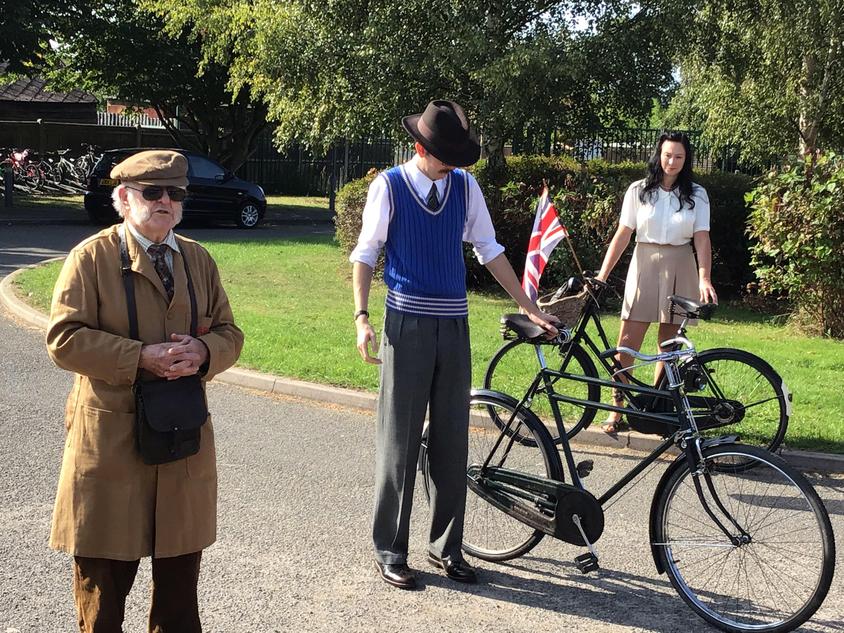
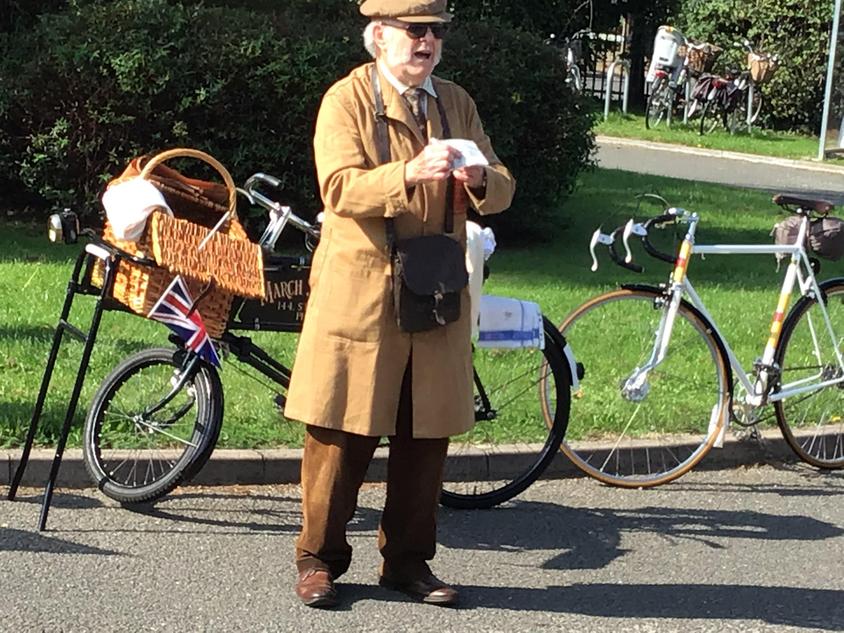
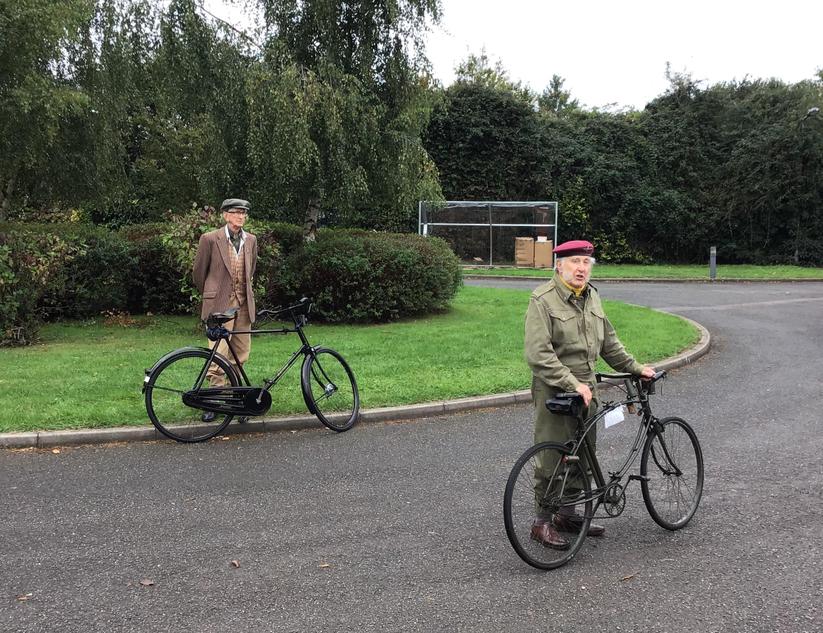
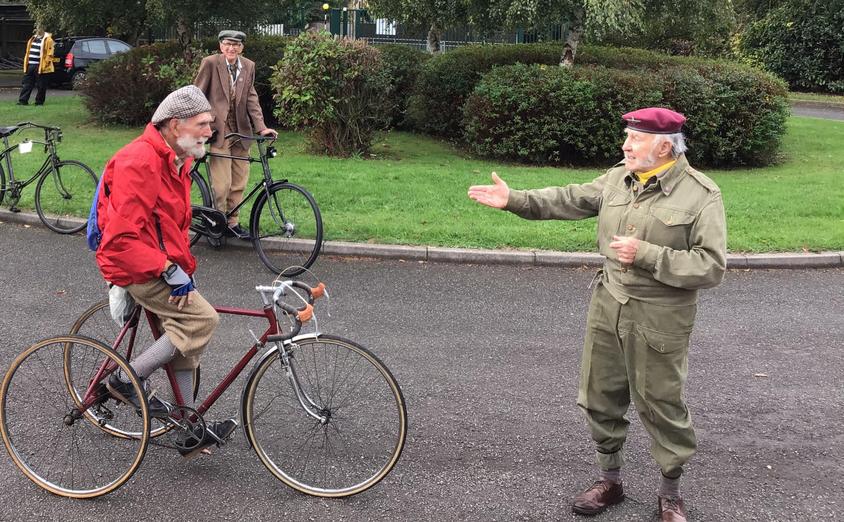
Recently, KS2 enjoyed daily visits from Colin Bedford and other members of the March Veteran & Vintage Cycling Club with some of their vintage bicycles. Colin has been undertaking a sponsored ride, covering 25 miles over the week and has stopped off en-route to show the children a different bike each day. Colin told us about the history of each cycle and about the period.
These are the bikes we saw:
- a WW2 Home Guard bike
- a WW1 Post Inspector's bike
- a WW2 Postman's bike
- a WW2 Paratrooper bike
- a 1940s trade bike from the old March Laundry on Station Road
In our classrooms
Subject content
Key stage 1
Pupils should develop an awareness of the past, using common words and phrases relating to the passing of time. They should know where the people and events they study fit within a chronological framework and identify similarities and differences between ways of life in different periods. They should use a wide vocabulary of everyday historical terms.
They should ask and answer questions, choosing and using parts of stories and other sources to show that they know and understand key features of events. They should understand some of the ways in which we find out about the past and identify different ways in which it is represented.
In planning to ensure the progression described above through teaching about the people, events and changes outlined below, teachers are often introducing pupils to historical periods that they will study more fully at key stages 2 and 3.
Pupils should be taught about:
- changes within living memory. Where appropriate, these should be used to reveal aspects of change in national life
- events beyond living memory that are significant nationally or globally [for example, the Great Fire of London, the first aeroplane flight or events commemorated through festivals or anniversaries]
- the lives of significant individuals in the past who have contributed to national and international achievements. Some should be used to compare aspects of life in different periods [for example, Elizabeth I and Queen Victoria, Christopher Columbus and Neil Armstrong, William Caxton and Tim Berners-Lee, Pieter Bruegel the Elder and LS Lowry, Rosa Parks and Emily Davison, Mary Seacole and/or Florence Nightingale and Edith Cavell]
- significant historical events, people and places in their own locality.
Key stage 2
Pupils should continue to develop a chronologically secure knowledge and understanding of British, local and world history, establishing clear narratives within and across the periods they study. They should note connections, contrasts and trends over time and develop the appropriate use of historical terms. They should regularly address and sometimes devise historically valid questions about change, cause, similarity and difference, and significance. They should construct informed responses that involve thoughtful selection and organisation of relevant historical information. They should understand how our knowledge of the past is constructed from a range of sources.
In planning to ensure the progression described above through teaching the British, local and world history outlined below, teachers should combine overview and depth studies to help pupils understand both the long arc of development and the complexity of specific aspects of the content.
Pupils should be taught about:
- changes in Britain from the Stone Age to the Iron Age
- Examples (non-statutory)
- This could include:
- late Neolithic hunter-gatherers and early farmers, for example, Skara Brae
- Bronze Age religion, technology and travel, for example, Stonehenge
- Iron Age hill forts: tribal kingdoms, farming, art and culture
- the Roman Empire and its impact on Britain
- Examples (non-statutory)
- This could include:
- Julius Caesar’s attempted invasion in 55-54 BC
- the Roman Empire by AD 42 and the power of its army
- successful invasion by Claudius and conquest, including Hadrian’s Wall
- British resistance, for example, Boudica
- ‘Romanisation’ of Britain: sites such as Caerwent and the impact of technology, culture and beliefs, including early Christianity
History – key stages 1 and 24
- Britain’s settlement by Anglo-Saxons and Scots
Examples (non-statutory)
This could include:
- Roman withdrawal from Britain in c. AD 410 and the fall of the western Roman Empire
- Scots invasions from Ireland to north Britain (now Scotland)
- Anglo-Saxon invasions, settlements and kingdoms: place names and village life
- Anglo-Saxon art and culture
- Christian conversion – Canterbury, Iona and Lindisfarne
- the Viking and Anglo-Saxon struggle for the Kingdom of England to the time of Edward the Confessor
Examples (non-statutory)
This could include:
- Viking raids and invasion
- resistance by Alfred the Great and Athelstan, first king of England
- further Viking invasions and Danegeld
- Anglo-Saxon laws and justice
- Edward the Confessor and his death in 1066
- a local history study
Examples (non-statutory)
- a depth study linked to one of the British areas of study listed above
- a study over time tracing how several aspects of national history are reflected in the locality (this can go beyond 1066)
- a study of an aspect of history or a site dating from a period beyond 1066 that is significant in the locality.
History – key stages 1 and 2
5
- a study of an aspect or theme in British history that extends pupils’ chronological knowledge beyond 1066
- Examples (non-statutory)
- the changing power of monarchs using case studies such as John, Anne and Victoria
- changes in an aspect of social history, such as crime and punishment from the Anglo-Saxons to the present or leisure and entertainment in the 20th Century
- the legacy of Greek or Roman culture (art, architecture or literature) on later periods in British history, including the present day
- a significant turning point in British history, for example, the first railways or the Battle of Britain
- the achievements of the earliest civilizations – an overview of where and when the first civilizations appeared and a depth study of one of the following: Ancient Sumer; The Indus Valley; Ancient Egypt; The Shang Dynasty of Ancient China
- Ancient Greece – a study of Greek life and achievements and their influence on the western world
- a non-European society that provides contrasts with British history – one study chosen from: early Islamic civilization, including a study of Baghdad c. AD 900; Mayan civilization c. AD 900; Benin (West Africa) c. AD 900-1300.
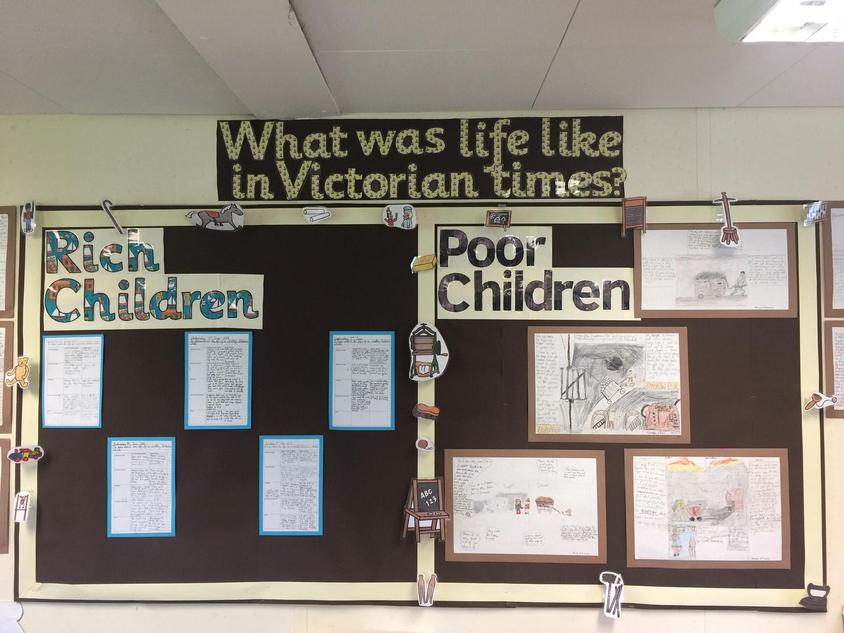
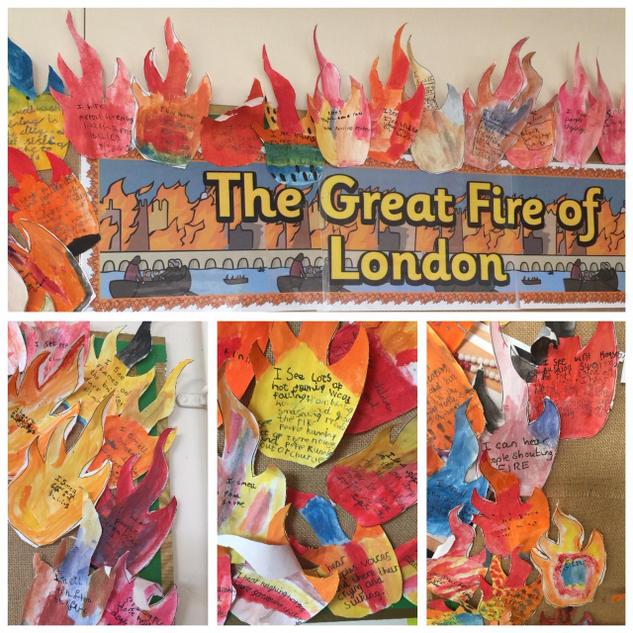
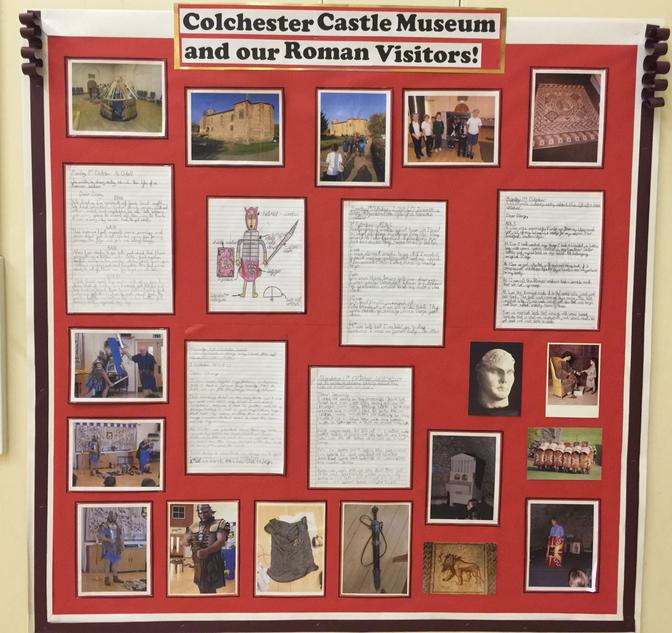
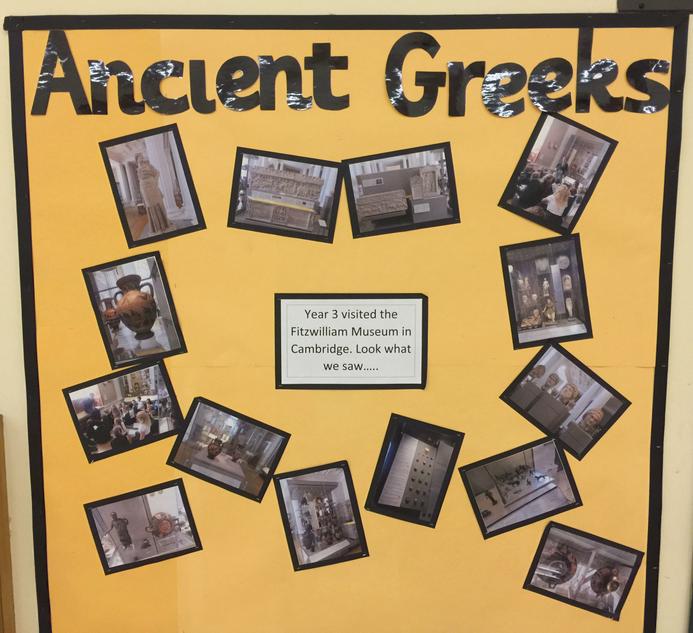
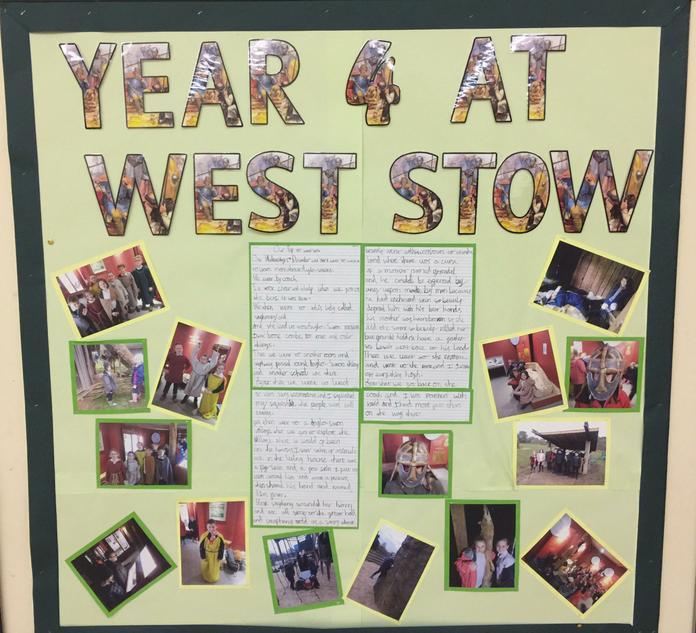
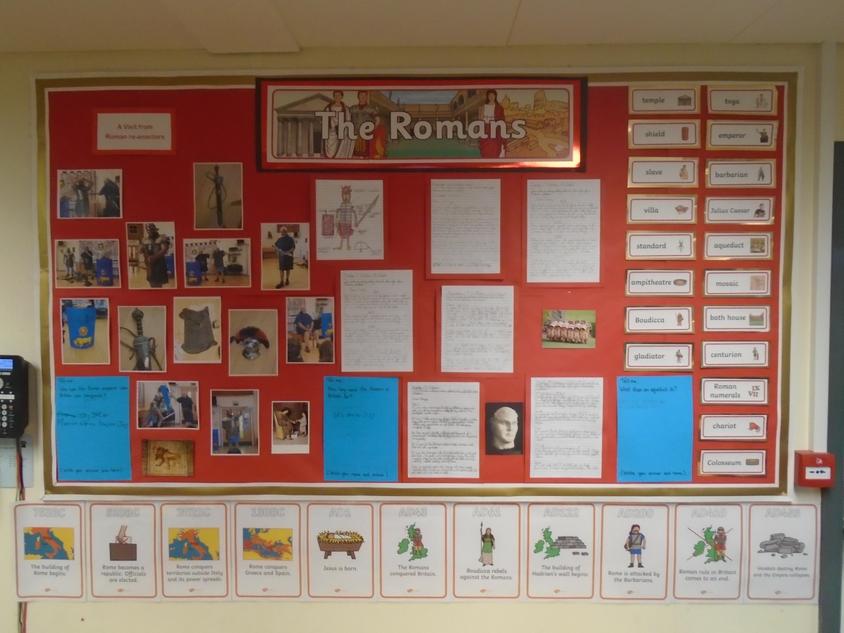
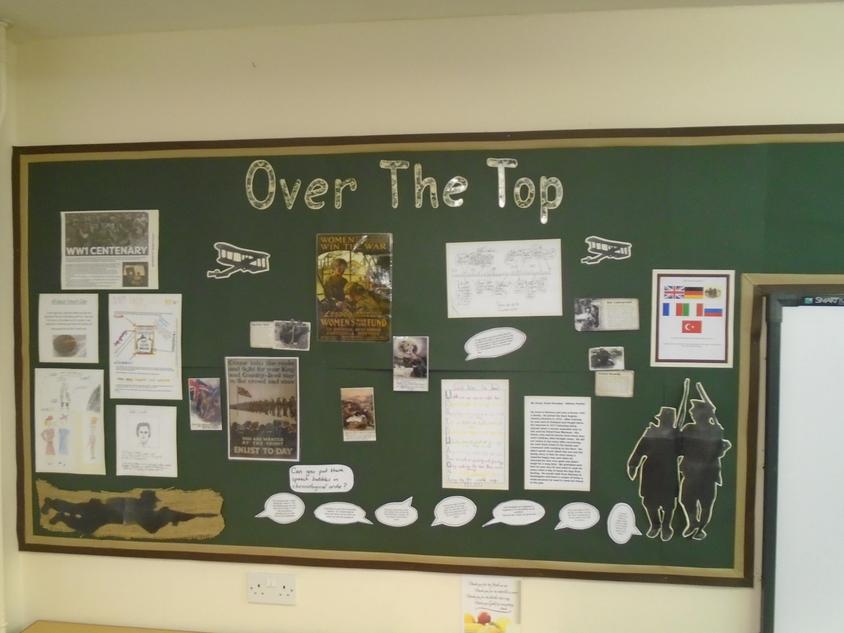
Here is some of the work we have been doing in History:
National Trust Educational Group Membership
This is our second year of having National Trust membership and having enjoyed several visits to properties last year, we look forward to visiting a few more this year! Visits can be linked to many areas of the curriculum and our recent history-linked ones have included Sutton Hoo (Anglo-Saxons) and Oxburgh Hall (Tudors).
Get In Touch
All Saints Interchurch Academy
County Road,
March,
Cambridgeshire
PE15 8ND